

Forming &
end preparation.
Enquiries may require hot-elbow forming, cold forming, tee pressing or reducer pressing, followed by the relevant treatment, machining and inspection.
Formed fittings and forged flanges follow distinct routes, supported by material control, treatment, machining and inspection.
This overview describes the production sequence. The applicable route and available equipment are confirmed during technical review.
Material specification, identification and required documentation.
Blanks and billets prepared for the selected route.
Fitting forming or flange forging / ring rolling, as applicable.
Cycles defined by grade, manufacturing route and specification.
Bevelling, facing, boring and drilling requirements.
Cleaning, finish and project protection requirements.
Applicable examination methods and acceptance requirements.
Checks against the specified standard or approved drawing.
Product identification and heat / lot traceability.
Protection, documentation and dispatch requirements.
Enquiries may require hot-elbow forming, cold forming, tee pressing or reducer pressing, followed by the relevant treatment, machining and inspection.
The specified flange route may include billet preparation, forging or ring rolling, heat treatment, machining, drilling and inspection.
Ask for equipment capacity and process confirmation for your product, grade and dimensions.
An illustrative hot-forming route for seamless carbon steel elbows. SERIC's seamless carbon steel elbow range is ½–24 inches.
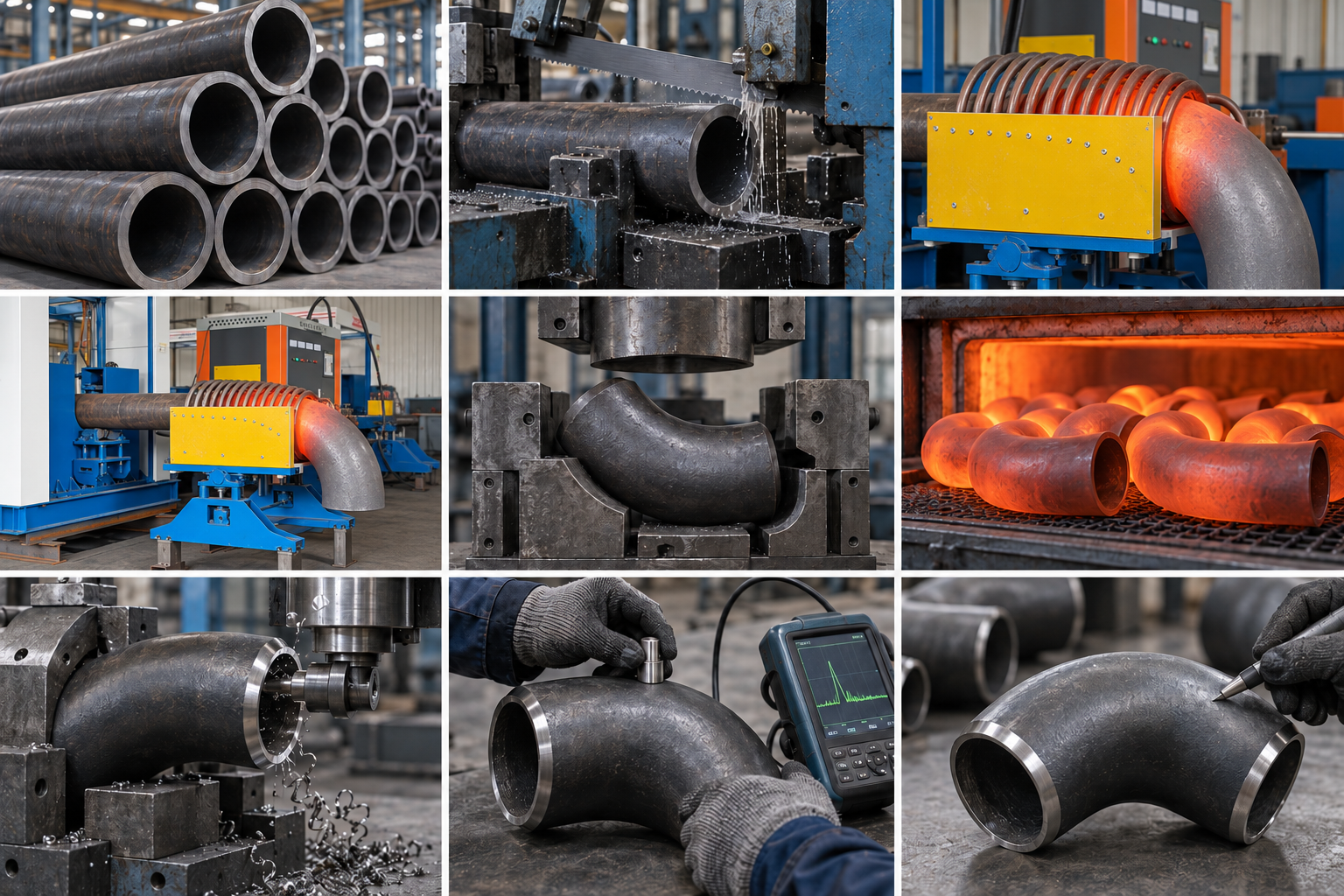
Heat treatment, surface cleaning and inspection follow the applicable material and project specification. The production route and equipment are confirmed during technical review.
The 26–72-inch carbon steel range uses a separate welded construction route and is not represented in this illustration.
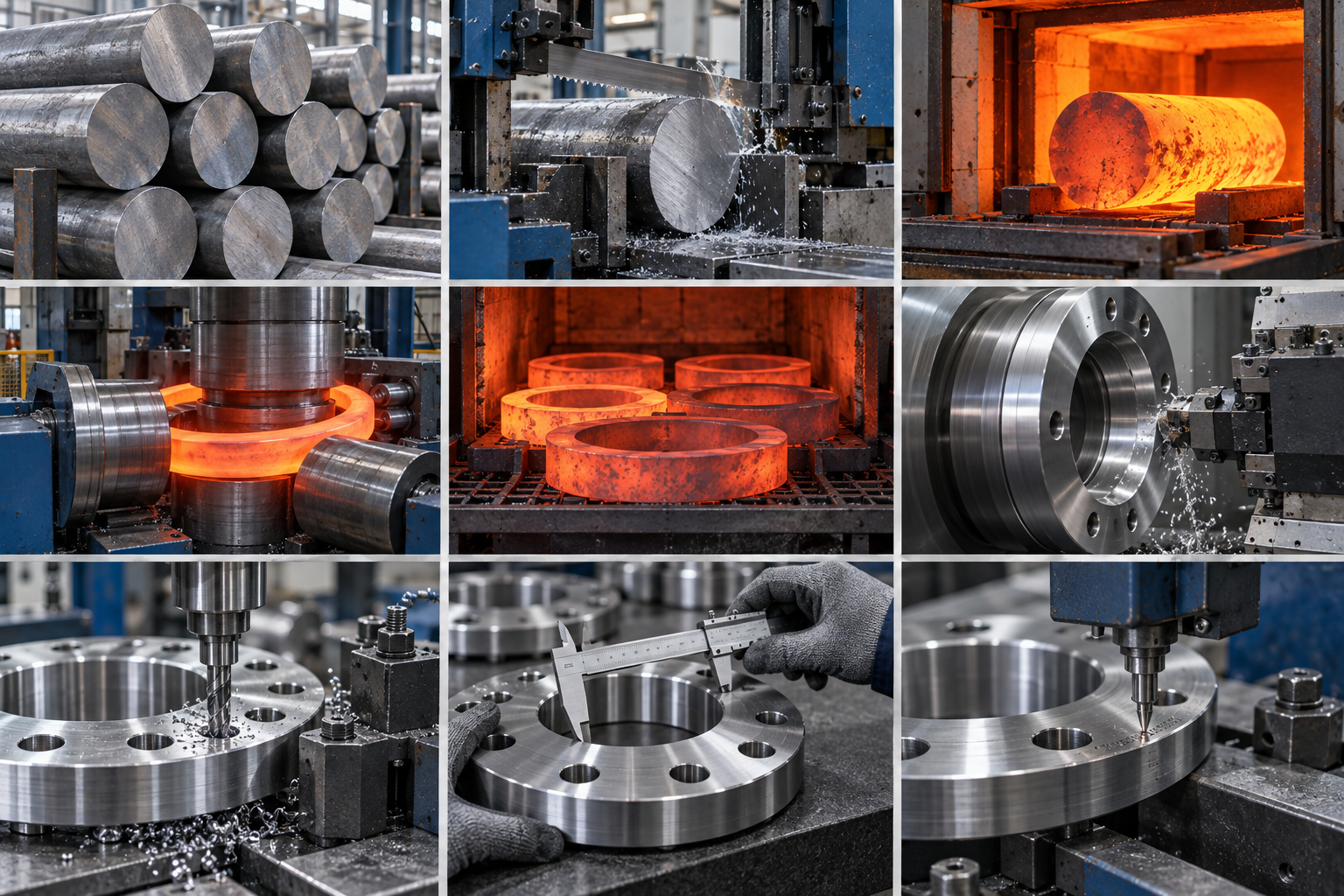
Route and machine capability are confirmed for each product, material and specification.
Product. Material. Size. Class. Quantity.